


The cost of an out-of-date point of sale can’t be seen on an invoice. But it can show up in lost sales and poor retention, especially when customers are looking to buy the high-value items that will enhance their home.
Many shoppers still value the opportunity for visual and tactile engagement found only on a sales floor. It’s the place they go to decide how comfortable a couch really is, or whether the cabinets and benchtop they’ve seen online will really suit their kitchen.
But what if the enthusiasm they feel about their purchase is stymied by a bad instore buying experience?
Too often, seamless service, speedy delivery and clear pricing are undercut by a POS that simply can’t meet customer expectations and keep up with today’s complex operating environment.
If the following signs feel familiar, it may be worth taking a closer look at whether your POS is helping your business grow or holding it back.
1. Your sales team can’t confidently sell from the showroom floor
Customers come to your store expecting to speak to staff who understand your business. They want to know what’s available, how long delivery will take and what alternatives are available if an item is out of stock.
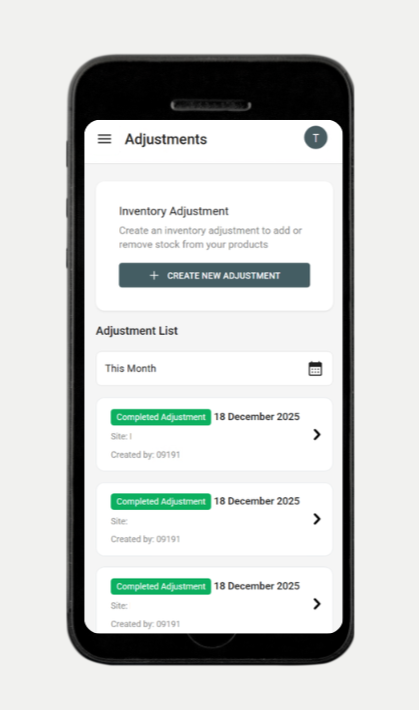
Their confidence, not to mention their patience, is undermined when they can’t get the answers they want. If your team members are consistently having to call the DC to confirm stock levels or are regularly asking buyers to wait while availability is ‘confirmed later’, then your POS is not giving them a clear, real-time view of your inventory.
Disconnected inventory data breaks the flow of the sale, undermines staff confidence and often results in missed opportunities on the sales floor, undermining your revenue and reputation.

2. Unified channel promises go unfulfilled
Today, your POS should be part of a unified ecosystem that allows you to effectively sell and deliver stock seamlessly across channels. Click and collect, delivery scheduling and cross-channel fulfillment are now standard expectations — even for large items.
But when there’s a mismatch between your POS, your online systems and your warehouse, problems emerge quickly.
Online stock doesn’t match what’s actually available, fulfilment options are limited or manually managed, you risk overselling and once again your store staff shoulder the burden of fixing broken promises. Meanwhile, the customer has gone elsewhere: 91% of shoppers will switch to a competitor instead of waiting for an item to be restocked.
Instead of enabling seamless unified cross-channel retail, the POS becomes the weakest link.
3. Pricing doesn’t add up
Pricing for items such as furniture, fixtures and fittings can be amongst the most complex across all retail environments. For one thing, customers often look for product combinations that include different sizes, materials and colours. Then, when it comes to paying for their items, they expect to pay a deposit and either finance the purchase in full or stage their payments with you.
On top of that, you not only have to manage sale promotions, but you need to offer special deals to trade or account customers that can involve scale or volume pricing.
If the POS doesn’t clearly indicate how to offer customers the product range they’re looking for, or provide a way to understand the promotions currently on offer, you can end up with margin leakage, confused customers and increased training effort for new staff.
4. Orders become lost in the process

When it comes to instore sales, the real complexity often starts after the customer says yes. Your POS needs to be able to create, track and update customer orders across long lead times, split deliveries and supplier commitments. If it struggles with these basics, then small issues quickly become service problems.
Your store team can be left having to manually manage deposits and balances, relying on spreadsheets to track order status and dealing with angry customers who can’t get a clear answer on when their items will arrive.
The result? Frustration for the customer, embarrassment for the team member, more inbound customer calls and a compromised overall experience.
5. A brake goes on innovation
Perhaps the biggest red flag is when you resist changing your business because the POS can’t easily support evolution.
This reluctance might show up as something as big as delayed store openings or something smaller such as hesitating to share inventory across locations and manual reconciliations between systems.
Instead of underpinning growth, your POS has become something you have to work around and a barrier to scalability and innovation.
If you’re experiencing two or more of these signs in your business, then your POS is creating friction instead of flow and slowing the business down instead of supporting growth.
That means it’s time to talk about how to move your POS forward before those limitations show up in lost sales and dissatisfied customers. Get in touch. We’d love to help you implement the solutions you need today and in the future.


