
people

From curry to coleslaw: Triquestra shares a world of cuisine

Triquestra is a place where we work hard to deliver the best results we can for our customers. But we know that those results aren’t just built on technology – they also depend on great teamwork.

That’s why our brilliant social committee come up with ways to get us away from our screens and whiteboards to celebrate special occasions, or just each other.

Recently, we came together to enjoy a potluck lunch that involved us bringing along a plate of food “That Reminds You of Home”. Triquestra has always been a company that’s welcomed a diverse workforce, and many of our team have come to New Zealand from across the world, so we knew we were in for a treat.

But we probably couldn’t have imagined Digestive biscuits sitting alongside butter chicken and Korean pork.
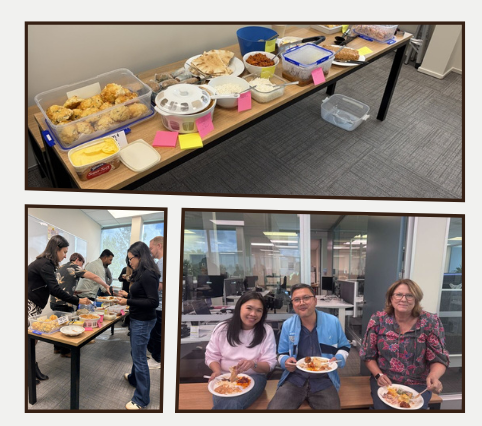
The Digestives were provided by Quality Manager Chay Grant, who was celebrating his Scottish family roots, while Solution Architect Fez Hussein made the excellent butter chicken, accompanied by rice and naan bread. And the Korean pork? It came courtesy of Tech Analyst Zac Freeman, who, while not being from Korea, decided to treat us to one of his culinary favourites!

We enjoyed Rendang curry from Indonesia, Embutido (a type of meatloaf) from the Philippines and cake from Russia, along with a host of other delicacies from around the world.

The Kiwi classics were there as well, with Julie Child, our Sales Administrator, bringing along a bacon and egg pie, our CEO Greg Cantlon providing a chocolate crunch made from Weetbix and Delivery Manager Kasia Burt taking care of our vegetable intake by way of a helping of coleslaw.

And then there were the scones. Our Head of Sales, Victoria Crossfield, came clean about her award-winning English family recipe handed down from her grandmother, who got it from … a Foodtown supermarket magazine in Auckland back in the 1990s. It’s okay, Victoria, every family has its skeletons and secrets!

It was great to see the effort and care that everyone went to and a joy to celebrate the richness of our cultural heritage. As everyone explained the background to their dish we got a greater appreciation of the food and of our colleagues as well.

Here’s to making it an ongoing tradition.
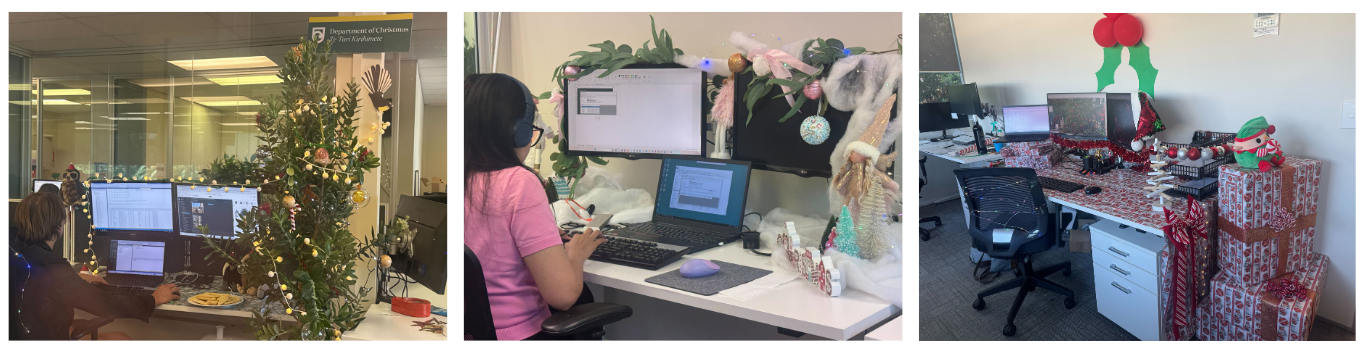
Triquestra brings out the (competitive) Christmas spirit

Here at Triquestra, we pride ourselves on our diligence and dedication to delivering the best software. Come December, we add a new target to our laser-focused quest for quality – Christmas.

Around here, Christmas isn’t just a chance to eat mince pies, it’s also a way to win prizes. This year’s celebrations came with some extra competitive edge, with not two but three opportunities to score victory over our colleagues.

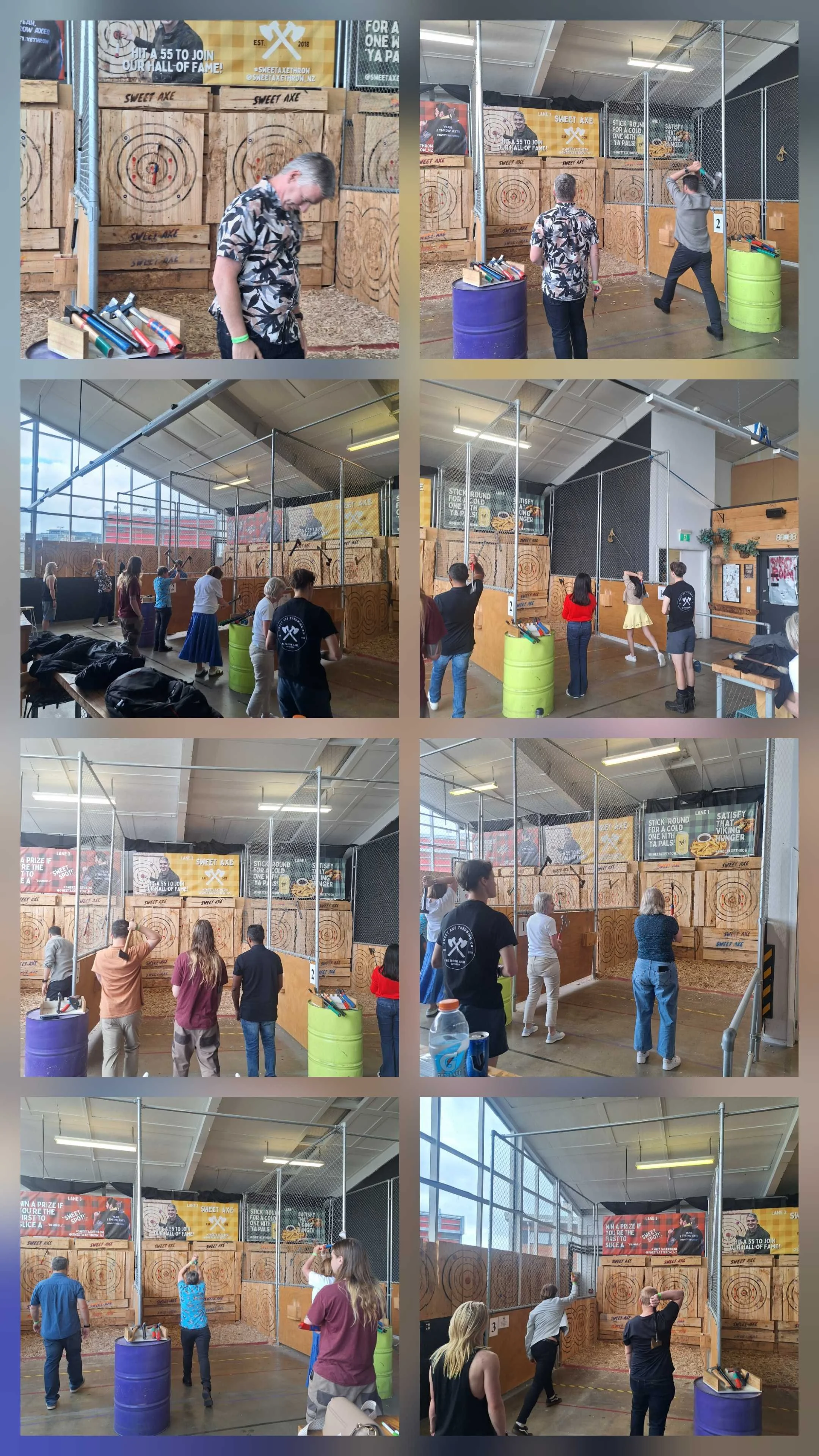
As always, we went out for a Christmas dinner at a local Auckland eatery to enjoy good food and company. And, as always, dinner was preceded by a fiercely fought contest. This year, we put away the child’s play of last year’s mini-golf, turned up the adventure dial and went axe-throwing. Upper-body strength and mental fortitude were tested as one by one the field narrowed to our CTO Mike Baxter and Product Owner Nevin Betts, with Nevin prevailing. We’re not sure Mike’s quite got over it.


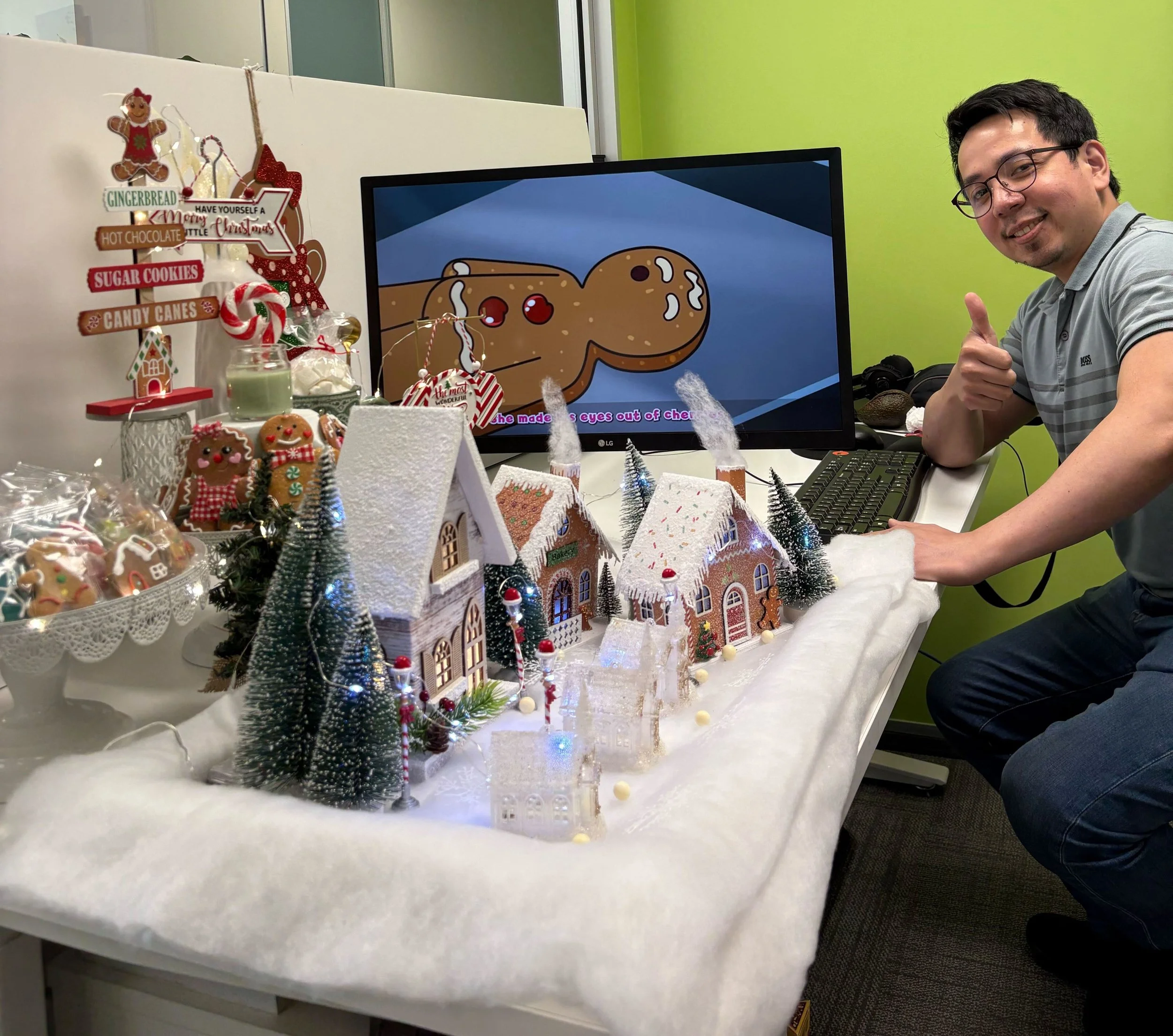
Then last week we enjoyed our annual Christmas barbeque, during which the winner of the newly inaugurated Best Decorated Desk competition was announced. An intense battle played out between the traditionalists like Sales and Marketing Manager Victoria Crossfield, who went for the snow and simulated fireplace effect, and the modernists like Tech Analyst Tom deBorst, who brought in a young Pohutukawa tree and decorated it with toy New Zealand birds such as kiwi and piwakawaka (fantails).


The decision was made by voting, and when all the votes were counted the winner was Developer Joel Sevilla, with his beautifully crafted gingerbread village. Congratulations, Joel!

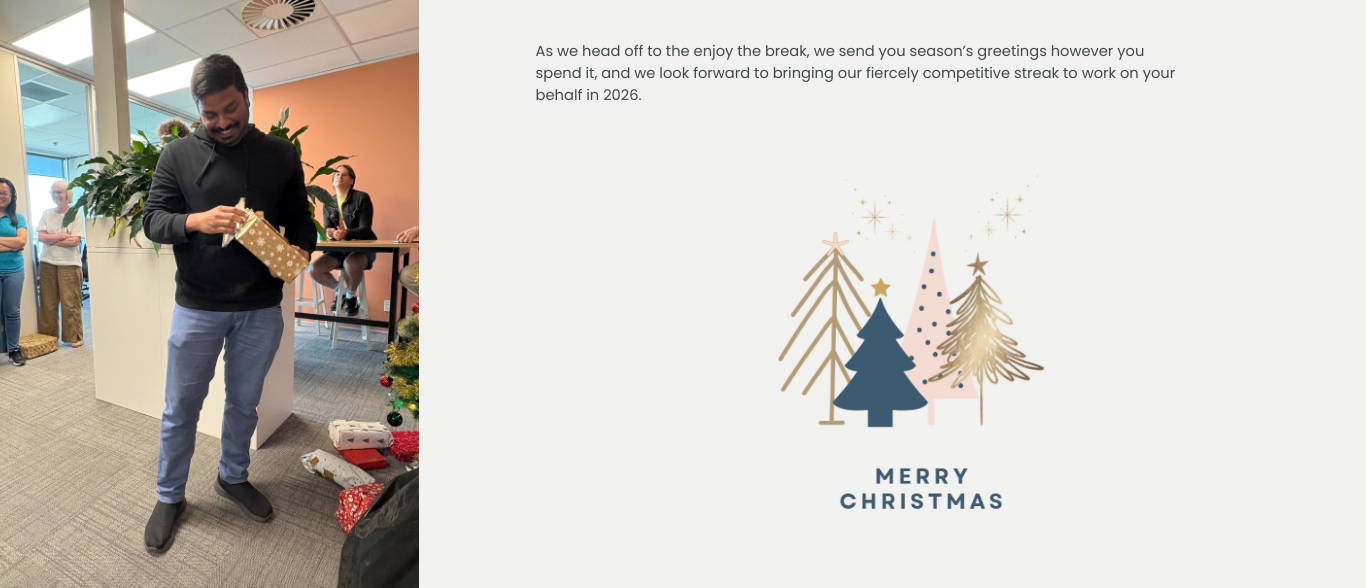
We finished up with a round of Secret Santa, with the usual TQ twist. Instead of simply buying a present for an allocated colleague, we do the competitive version where we can either take something from under the tree or take a present from someone who’s already chosen a gift. It’s a white-knuckle ride to the end to see if you’ll hang on to that gift you really want or be left with the one you’re going to have to give to your great-uncle.


Triquestra celebrates Diwali, the Festival of Lights

Celebrating Diwali has become a yearly event in New Zealand. Across the country, crowds gather to play music, dance, eat and, of course, let off fireworks to mark the Festival of Lights that symbolises the triumph of good over evil, light over darkness and knowledge over ignorance.

Here at Triquestra, Diwali is part of our annual calendar, too. For the past few years, we’ve celebrated the festival with a morning tea, and some of us even get dressed up for the occasion!

This year was no exception, despite farewelling our Diwali queen Vidula Kulkarni in July. Our social committee elves treated us to a feast of samosas, dal kachori and pakora from local restaurant Mithaiwala, as well as an assortment of delicious kaju sweets.

It was also a good time to reflect on the similarities between Diwali and Matariki that we celebrated back in June. Both festivals rely on the lunar calendar, and both involve spending time with family and friends contemplating the past and looking to the future.

As New Zealand changes and evolves, festivals like these are gaining in importance and popularity. Triquestra’s proud to play our part in celebrating them and the diversity of not just our country but of our great TQ team as well.

Happy Diwali!

Triquestra celebrates Matariki 2025

In 2022 New Zealanders gained a new mid-winter public holiday to celebrate Matariki, named after the star cluster that rises on the winter horizon and heralds the Māori New Year.

The Matariki cluster, also known as Pleiades or the Seven Sisters, is visible across the world and has significance to people globally, being mentioned in the Bible and the Koran, and known as Subaru in Japan.

In traditional Māori culture, its first appearance in the early morning sky marked the end of harvest and was a time for people to come together for feasting, as well as to reflect on the past year and plan for the future. Now, all of New Zealand’s people can share in this important Māori tradition with a holiday that this year fell on Friday, 20 June.

Learning about Matariki holds a special meaning at Triquestra, a proudly diverse New Zealand company. In the past, we’ve held events celebrating Eid-al-Fitr, Diwali and Chinese New Year, and in the spirit of inclusion we saw last week as a chance for everyone to learn about New Zealand’s Indigenous culture.

Our guides on this journey were Trev Teau and Kauri Wharewera from Kulture Ink, a tattoo studio that specialises in Māori and Polynesian design, to explain the history and meaning of Matariki. They introduced us to the nine stars that comprise the Matariki cluster, explaining that together with other surrounding stars they form the shape of a waka, or canoe, with Matariki at the prow and Orion’s Belt at the stern.


Trevor Teau & Kauri Wharewera from Kulture Ink

Each star within the Matariki cluster has its own meaning, including Pōhutukawa, which connects us to those who have passed on, and Tipuānuku, which has a connection to the food that comes from the earth.

The most important part of the Matariki celebration is Hautapu, which involves feeding the stars with a sacred offering of food harvested from the earth, water and sky. During hautapu, loved ones who have passed away in the previous years are remembered and mourned, and the food is cooked before Matariki rises. The ceremony ends with the rising of the sun.

Kauri explained that Matariki is a time to harvest not just food but also the lessons that have been learned in the past year, while planting the seeds for the coming year until Matariki rises again.

Afterwards we enjoyed a feast of our own, including fried bread fresh from the oven. Sharing food also gave us a chance to reflect on the similarities between Matariki and Eid, as well as Easter, which are connected to the lunar calendar and have a focus on feasting, and the ways that people across the world find similar ways to come together and celebrate with a feeling of renewal.