The benefits of moving to a unified commerce model are clear and obvious. So why do projects still stall, or fail?
We’ve long since passed the point where unified commerce is a little-known buzzword in retail. Switched-on retailers have known about its benefits for some time now, from centralised cross-channel engagement points to reduced stock-outs and improved customer satisfaction.
So why are some deployments still hitting roadblocks?
Here we look at six common reasons why unified commerce projects fall short and how to avoid the pitfalls.
1. Misunderstanding the outcome
It’s hard to end up in the right place if you don’t correctly define your destination or understand where you’re heading.
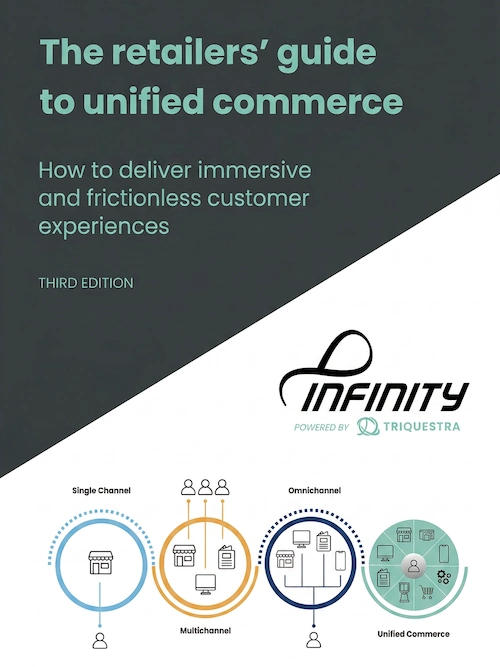
One reason unified commerce projects falter is because decisionmakers confuse unified commerce with omnichannel. While these terms are still used interchangeably, there’s a significant difference between them, and misunderstanding that difference can mean you don’t scope the project correctly.
An omnichannel approach will allow customers to shop across channels via a consistent front-end, but those channels operate in functional silos. For unified commerce to truly work, you need a central hub that breaks down the silos between channels to deliver truly seamless experiences, while also solving omnichannel’s biggest weakness — operational complexity.
Without that foundational understanding, you can’t get the architecture that underpins the project right.
Solution: Understand where you want to end up. If your goal is a fully functional unified commerce system then make sure all stakeholders have a clear view of what that means and what it will take to achieve the desired outcome. Get buy-in across all functional areas and teams.
2. Struggling with legacy backends
Even if you understand that implementing unified commerce will involve breaking down siloed systems, actually doing the work of integrating what are often customised, legacy backends can be complex or costly.
Often it is these costs and complexities that cause retailers to delay shifting to a new system, preferring instead to rely on middleware that simply adds another layer of complexity to the mix.
That means that when the unified commerce project finally kicks off, it’s dealing with fractured, fragile systems that have to be made robust and integrated, undermining the chances of success.
Solution: Start out with an understanding of the systems and customisations you currently have and the effort involved in integrating them. Decide what will be replaced, retired or retained. Have a realistic view of the costs, resources and timelines involved and commit to meeting them.
3. Putting platform selection ahead of business needs
A recurring mistake organisations make when implementing unified commerce is to prioritise platform selection over business requirements. They choose a top-end, big-brand system in the hope that it will solve their operational issues and backend fragmentation, only to realise that the new platform hasn’t solved the underlying structural problems, leaving the project in limbo.
Solution: Make sure you’ve done the groundwork of understanding your current system and the integration effort so that you’re able to identify a system that meets your business needs and scale.
4. Poor data quality
Any unified commerce project will not only falter but fail if it doesn’t get the basics right. And it doesn’t get any more basic than exposing current, consistent inventory and customer data across all channels.
Unified commerce relies on your store, back office and head office teams all seeing the same accurate real-time data so stock is available to sell from any channel and orders can be fulfilled by pick-up or delivery across the organisation.
If data implications aren’t properly understood, accounted for and scoped, then the timeline slips, costs rise and support for the project stumbles.
Solution: Clean, map and integrate data alongside experts who understand your systems and requirements.
5. Entrenched processes and organisational resistance
Implementing unified commerce doesn’t just involve a technology upgrade. It also requires buy-in from those on the frontlines, including store managers and staff, and it needs leaders who will champion its implementation and overcome any structural barriers within the business.
Without this type of leadership and a willingness to do things differently, projects can suffer when, for example, a store manager resists fulfilling online sales from their stock because the revenue will be credited to another channel.
Solution: Use executive sponsorship to update processes and offer incentives to those who might otherwise undermine the project by running fragmented systems and gatekeeping revenue.

6. Rushed implementation
Trying to replace numerous separate systems, POS, CRM, loyalty and order management, across all stores and channels can make for drawn-out projects that struggle to return value in the short term.
Business cases weaken while nothing is live, stakeholders lose patience and customisation requests pile up as each team tries to recreate its old workflows.
The temptation is to rush through the implementation phase to keep stakeholders happy.
Solution: Phase the rollout. Run pilots in selected stores, then trial one high-value capability such as unified inventory visibility or click-and-collect, then expand, rather than trying to implement everything everywhere all at once just to get to the finish line.
Keeping the project on track
As you move to a unified commerce strategy that lets you deliver the experiences that are best for customers and most profitable for you, you’ll need an experienced partner who understands these pitfall and is committed to your success.
At Triquestra, we understand what goes into delivering unified commerce across highly innovative retail industries. We have a wealth of experience in fast-paced, data-intensive environments where any level of downtime is unacceptable, and we have people who can help you plan and implement your projects, so you get the fundamentals right.
Our mature Infinity platform allows you to focus on delivering innovation because the critical functionality you need already exists. Our open architecture and APIs will let you cultivate a modern retail and CX ecosystem that reduces risk and increases flexibility.
We also believe that biggest isn’t always best. A company like Triquestra has few layers of bureaucracy, giving us more agility and responsiveness.
Looking for a partner that can help you implement a successful unified commerce project? Get in touch or email sales@triquestra.com. We’d love to talk about how we can help you define and scope your goals, develop a business case and create your roadmap to unified customer experiences.
Infinity unified commerce is powered by Triquestra, an Auckland-based retail software company.